Support for and opposition to economic policy spin on the same issues

January 27, 2025 – February 8, 2025 | Vol.15, #05 & 06

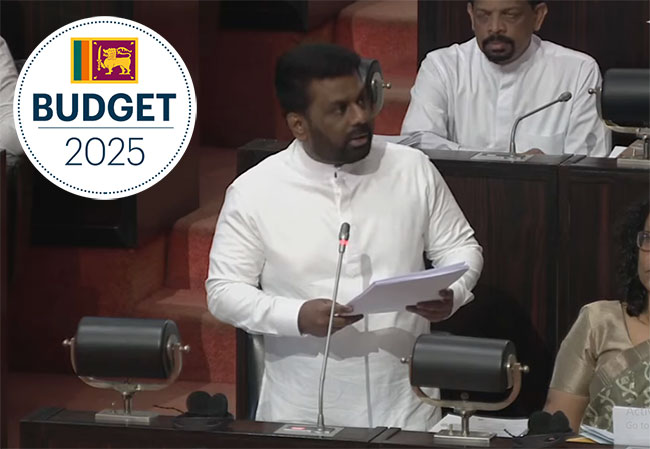
Event: On February 17, the second reading of the Appropriation Bill is scheduled to be presented in parliament.[1][2] Following this, parliament will begin the debate on the budget proposals from February 18, with the vote on the second reading scheduled for February 25.[3][4]

[paywall layout_id=”1906″ service_tags=”TMA,FP” preview=”true”]

In the lead-up to the second reading of the 2025 Appropriation Bill, Sinhala TV coverage was limited, while press reporting provided in-depth commentary. Social media discourse surrounding the topic also remained somewhat marginal.[1]

Sinhala media coverage of the 2025 Appropriation Bill contained both criticism and anxiety which arose from two different camps: one that was supportive of the government and the other that was oppositional to the government. The criticism and anxiety pivoted around the same issues but differed depending on the camp. 

The supportive camp included those generally supportive of the government and rooting for its success. It criticised the government for too much continuity with the economic policies from the past. Therefore, it also saw government actions as delivering too little “system change” in contrast to what was promised during elections.

These voices, including columnists from Lankadeepa and others, pointed out that the government has once again announced populist measures such as wage and pension increases for public sector employees, following the same patterns as previous administrations.

The anxiety within this camp manifested in its doubts about the government’s level of competence to manage the economy effectively.[2] It expressed anxiety over whether the government has a coherent economic plan to solve the problems of the masses and whether it is able to also resolve the problems of governance as it promised to do. 

Conversely, the opposing camp included those who are generally critical of the government and prophesying its failure. Unlike the supportive camp, it saw the continuity of past economic policies as a positive. But it criticised the government for having misled the people at the elections with promises that were not practical and which the government is not able to deliver on. 

The opposing camp did not manifest anxiety itself, unlike the supportive camp, but sowed anxiety by asserting that the NPP government lacks the competence to navigate Sri Lanka’s economic situation and may end up deepening financial instability instead of resolving it. 

Opposition voices such as former MP UNP Chairperson Wajira Abeywardena argued that the NPP’s inexperience poses a risk to economic stability, emphasising that its governance has already resulted in economic mismanagement which might eventually lead to greater economic difficulties.


[1] The MPA team monitored Facebook profiles, TikTok handles and YouTube channels using Junkipedia for the keywords budget, debt, expenditure, vehicles and taxes. The monitoring period was January 27 to February 7, 2025.

[2] See MPA Vol.15, #02 & 03 and Vol.15, #04.

[/paywall]