Headwinds on the government’s electoral momentum

April 28, 2025 – May 4, 2025 | Vol.15, #16

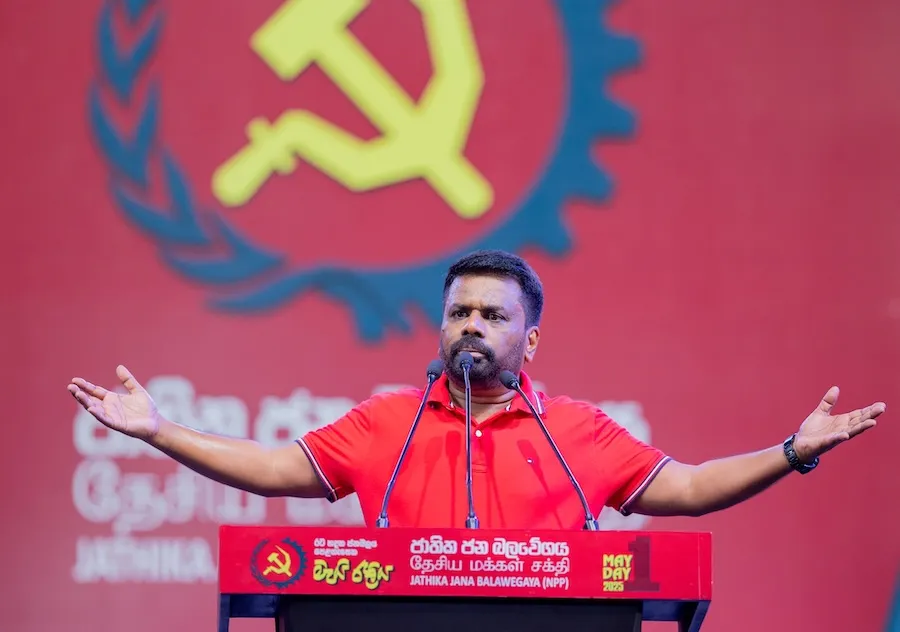
Event: The voting for the local government elections commenced across the island at 7 am on May 6, 2025.[1][2]

Sri Lanka has not held local government elections since 2018. The 2022 elections were postponed following the economic crisis and the aragalaya (mass uprisings).[3][4]

The 2023 elections were indefinitely delayed after the government failed to allocate funds.[5][6] Local government authorities have been functioning without elected representatives since March 2023, as the previous terms have expired.

The previous government’s decision to postpone local elections – citing a lack of funds amid the economic crisis – was legally challenged. The court subsequently ordered that the elections be held without further delay.[7][8]

Source: Colombo Telegraph

[paywall layout_id=”1906″ service_tags=”TMA,FP” preview=”true”]

At the time of publishing this MPA, Sri Lankans would have cast their votes to elect representatives to local government bodies since the last election in 2018, with early postal vote results already emerging.[1]  

In the final week of campaigning, Sinhala media discourse – across print, television and social media platforms (as monitored through Junkipedia, a social media monitoring and analysis tool) – was dominated by competing electoral narratives aimed at the governing party.[2]

This week’s MPA explores four key election time narratives, assessing the extent to which each has resonated with the public and has/hasn’t gained momentum.  

1. Which election time narratives have gained momentum?

Opposition figures – such as Opposition Leader Sajith Premadasa and MPs Namal Rajapaksa, Dilith Jayaweera and Tissa Attanayake – and the privately owned Aruna newspaper[3] and media outlets such as Ada Derana[4]and Hiru[5] offered critical perspectives on the government’s performance. 

Narrative 1: A government that misleads the people

A narrative gaining momentum is that the government has misled the public, particularly by making promises that it did not intend to keep, and by backtracking on its commitments. This criticism has been amplified by the use of the Sinhala term පච/පචයා (pacha/pachayatrans. a derogatory way of referring to the telling of lies; please refer to the memes published in this week’s issue).  The term has gained momentum on social media and is used to portray the government as lacking integrity.

This is the first negative narrative on the present government, since it won the elections in 2024, that has begun to resonate in the media. It is a narrative that challenges the core appeal of President Anura Kumara Dissanayake and the NPP, which contested on a platform emphasising integrity, positioning themselves in contrast to the corruption and misgovernance of past governments.[6] The campaign also served to shape public expectations, making integrity central to the government’s legitimacy and also a yardstick by which the government is evaluated.

There are many instances in which the issue of misleading statements have been flagged, and fuelled the narrative of government misleading the public. NPP MP Nilanthi Kottahachchi allegedly claimed that the NPP government would pursue the recovery of stolen assets purportedly hidden in Uganda.[7] However, subsequent media reports indicate that she backtracked on this statement, later asserting that her remarks had been taken out of context.[8] Another instance in which this narrative emerged was when the then Speaker of Parliament Ashoka Ranwala was accused of holding a falsified doctorate.[9] Yet another was when Deputy Minister Nalin Hewage cited figures on Sri Lanka’s foreign reserves, which were later fact-checked to be false.[10]

The Tamil press has similarly portrayed the government as misleading the public, particularly concerning land release. The president and the government, who had promised to return land in the North to the people, are now seen as seizing land from them (please refer to The Divide featured in this issue of the MPA).

This perception of misleading the public and inconsistency in claims intensified when the NPP-led government backtracked on repealing the Prevention of Terrorism Act (PTA), and even invoked it in selected cases of arrest.[11] These actions have sparked criticism, as the NPP had previously opposed the PTA and was expected to suspend its use and repeal it.

It is not any one of these instances or issues but the growing number of them and the increasing attention to, and awareness of, the contradictions that has tipped the narrative towards seeing the government negatively as misleading the public.

Narrative 2: Elections as a channel for discontent

A second narrative that gained traction – also driven by the Opposition – frames the LG election as an opportunity for the public to express its displeasure with the current government. Within this narrative, the election is not viewed as just a routine democratic exercise but a referendum on government performance, serving as a warning signal to those in power. This narrative gained traction in the context of discontent with integrity and follow through as cited above, with the election being seen as an opportunity for people to express their concern in a tangible way.

2. Which election time narratives are failing to gain momentum?

Amid the current discourse surrounding the LG elections, two key narratives from the past elections appear to be losing traction, despite them being mooted currently as well.

Narrative I: The anti-corruption narrative

The first is the anti-corruption narrative promoted by the NPP government at the beginning of the presidential campaign. While this positioning, as an administration that will fight against corruption, proved to be effective at the national level during the 2024 elections, the narrative seems not to be gaining much traction at the local level. During LG elections, voters tend to prioritise familiarity and personal ties with candidates over abstract commitments to systemic reform.[12]

Narrative II: The voter mobilisation narrative

The second narrative that seems to be failing to gain momentum is the call to vote, advanced by both the government and the Opposition. Despite efforts to frame the LG elections as a civic duty and a national-level election, voter enthusiasm appears muted. Many citizens who may have been floating voters during the presidential and general elections tend to show signs of disengagement. This group of voters may abstain from voting in the election. This apathy may stem from perceived gaps between campaign promises and delivery and a belief that LG elections will have a limited impact on national governance.


[1] For more information, please see https://www.parliament.lk/dates-of-elections.

[2] The MPA team monitored Facebook profiles, TikTok handles and YouTube channels using Junkipedia for the keywords government, lies, pacha, Anura and elections in English from April 28 to May 3, 2025.

[3] MP Dilith Jayaweera established Liberty Publishers (Pvt) Limited, which is the publisher of three national broadsheets – Aruna, The Morning and Thamilan. For more information, please see https://cdn.cse.lk/cmt/upload_report_file/568_1693568870427.pdf.

[4] Derana Macro Entertainment (Pvt) Limited is owned by Powerhouse Limited. Dilith Jayaweera and Varuni Amunugama Fernando jointly own 49.41 per cent of shares which makes them majority shareholders of Power House Limited. They also own 9.00 percent each as individuals. For more information, please see https://sri-lanka.mom-gmr.org/en/media/detail/outlet/derana-tv/.

[5] Hiru TV is maintained by Asia Broadcasting Corporation (Pvt) Limited (ABC). ABC is listed as a subsidiary of Rayynor Silva Holdings (Pvt) Limited. For more information, please see https://sri-lanka.mom-gmr.org/en/media/detail/outlet/hiru-tv/.

[6] See TMA Vol.14, #37; Vol.14, #43; Vol.14, #44.

[7] For more information, please see https://www.dailymirror.lk/breaking_news/Masked-woman-questions-MP-Kottahachchi-about-hidden-assets-in-Uganda/108-298497, https://www.instagram.com/dailymirrorlk/reel/DBHDjXStbWv/?locale=zh_CN&hl=kn and https://www.dailymirror.lk/latest-news/Does-NPP-tone-down-Uganda-money-allegation/342-293785.

[8] For more information, please see https://www.dailymirror.lk/print/front-page/Does-NPP-tone-down-Uganda-money-allegation/238-293803, https://www.dailymirror.lk/latest-news/Does-NPP-tone-down-Uganda-money-allegation/342-293785, https://srilankanews.lk/en/a-statement-from-uganda-menike-about-the-money-hidden-uganda/, https://web.facebook.com/Dailymirroronline/posts/people-have-complete-right-to-lie-kottahachchihttpswwwdailymirrorlkbreaking_news/986328773524462/?_rdc=1&_rdr and https://www.hirunews.lk/english/391474/mp-nilanthi-kottahachchi-defends-peoples-right-to-lie.

[9] For more information, please see https://economynext.com/sri-lanka-parliament-speaker-resigns-after-allegations-over-fake-doctorate-194209/#modal-one and https://www.dailymirror.lk/breaking-news/Speakers-false-Doctoral-title-is-an-insult-to-Parliament-as-the-oldest-in-Asia-UNP/108-297820.

[10] For more information, please see https://srilanka.factcrescendo.com/2025/04/08/an-explainer-on-surpassing-the-imf-target/.

[11] https://www.ft.lk/opinion/Muslim-rage-over-a-sticker/14-775489 and https://www.wsws.org/en/articles/2025/04/07/bprl-a07.html\.

[12] For more information, please read https://www.colombotelegraph.com/index.php/sri-lankas-local-government-elections-challenges-stakes/ and https://www.themorning.lk/articles/XkDIlgIPMUV7LN2G0ATr.

To view this week’s news summaries, please click here.

To view this week’s social media data, please click here.

[/paywall]