Government’s anti-corruption efforts boost public trust

June 23, 2025 – June 29, 2025 | Vol.15, #24 | ISSN 3084-9330

Photo credits: AsianMIrror

[paywall layout_id=”1906″ service_tags=”TMA,FP” preview=”true”]

Over the past week, concerns about the health sector have dominated discourse in the Sinhala media – across print, television and social media (as observed through the social media monitoring tool Junkipedia).[1]

This week’s analysis is set out under four headings.

I. Why did the media focus on the health sector?

There were two events in the news cycle that brought media focus on the health sector.

1. The arrest of Dr. Maheshi Wijeratne

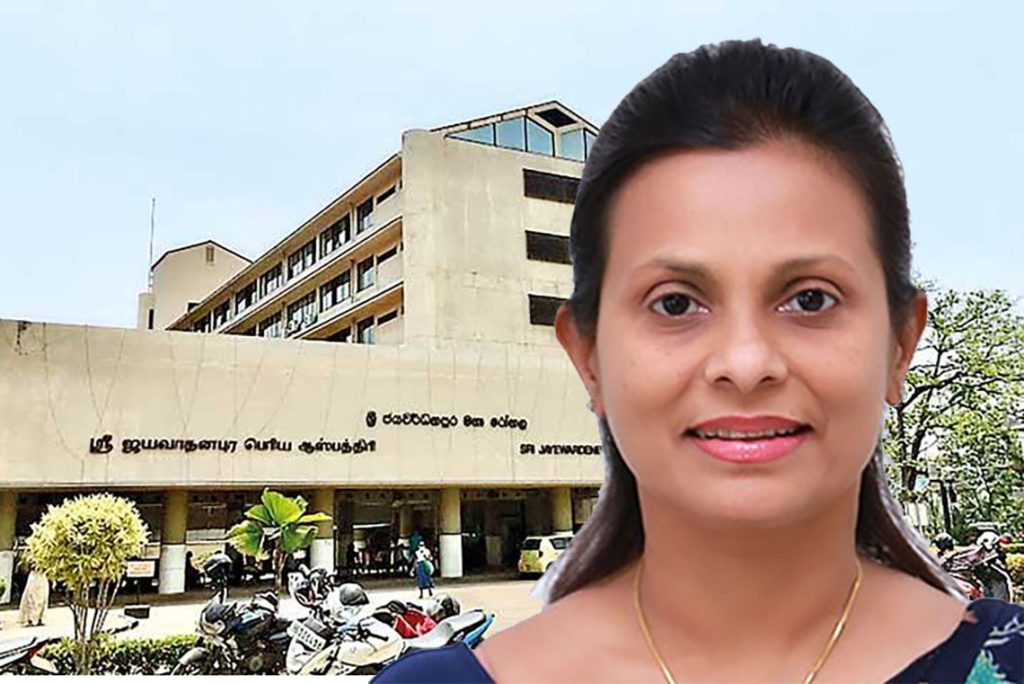
On June 17, Dr. Maheshi Wijeratne, a consultant neurosurgeon at Sri Jayewardenepura General Hospital, was arrested by the Commission to Investigate Allegations of Bribery or Corruption (CIABOC).[2] She is accused of directing patients to purchase overpriced surgical equipment from a private company affiliated with her, reportedly profiting from the sale of medicines and supplies by this third-party firm.[3]

2. The submission of the report related to the arrest of former Minister of Health Keheliya Rambukwella

On June 19, a final report in the high-profile case involving former Health Minister Keheliya Rambukwella and 11 others, related to the substandard human immunoglobulin drug deal, was submitted to the Maligakanda Magistrate’s Court.[4] Reportedly, it was discovered that substandard and contaminated drugs were imported and administered to patients in government hospitals.[5] A WHO-accredited German laboratory confirmed that samples of human immunoglobulin contained no active medication, consisting only of saline contaminated with Enterobacter hormaechei, a bacterium known to be dangerous.[6] Tests on Rituximab, a cancer drug, similarly showed no active pharmaceutical ingredient and that it was just saltwater.[7]

II. What made these stories be of special public interest?

There are two aspects of the Sri Lankan social psyche that gave these stories – related to health sector corruption – added traction and public engagement.

1. High value placed on the public healthcare system.

In the absence of universal health insurance, the state’s freely accessible healthcare system has long served as a critical part of the social protection infrastructure in Sri Lanka. This infrastructure is globally recognised for its reasonable quality, ranking among the top five in the South Asian region.[8]

As a result, breaches of integrity in the health sector in the treatment of patients, particularly involving corruption, are framed as deep violations against society, often provoking widespread outrage and condemnation. Such misconduct is treated as a distinct and more serious transgression than similar actions in other domains.[9]

2. High honour and expectations placed on medical doctors.

In the Sri Lankan psyche, medical doctors are highly regarded, often referred to as devivaru/දෙවිවරු in Sinhala (trans. deities) due to the social value placed on the profession of healing (veda/වෙද in Sinhala). This high regard also translates to a higher-class status attributed to the profession.[10] Consequently, corrupt or untoward actions of medical doctors are also subjected to a higher degree of discussion and criticism.

III. Impact on the government: positive

Public sentiment towards the government gets shaped positively each time there are announcements in relation to action on corruption. Additionally, a slow accumulation of such actions is now also leading to greater confidence that the “system” is working against corruption. This positive reaction is based on two reasons:

1. Increased confidence in the effectiveness of anti-corruption institutions.

There is a growing perception that anti-corruption bodies at present are becoming operationally effective, are actively engaged and are guided by sufficiently competent leadership.

This is resulting in positive sentiment towards the government.  

2. Increased confidence in the independence of anti-corruption institutions.

There is a growing positive sense that the government is not directly interfering in ongoing investigations. This marks a notable shift from the past, when institutions such as the judiciary and the CIABOC were widely perceived as compromised or politically influenced.[11] In contrast, the current stance is seen as a departure from that legacy, fostering cautious optimism that investigations are now being allowed to proceed independently. The government is gaining public trust as it gets credited for non-interference in the work of anti-corruption bodies.

Overall, historically, when the anti-corruption institutions are seen as functioning effectively and independently, public confidence in the government has improved – and this pattern is being played out at present as well.[12]

IV. Forward implications

Trust in ongoing anti-corruption efforts is a critical source of political legitimacy for the government, particularly when it faces public criticism in other areas.

In recent times, the government has faced criticism over various issues, including the shortage of salt in the island[13] and the president’s nomination for the post of auditor general among others.  In this context, the increasing trust in the government’s anti-corruption efforts appears to be impeding the spread of criticism and negativity.

In Sri Lanka, where disappointment with governance has been consistent across political cycles, the perception that anti-corruption institutions might now be functioning effectively and independently is tipping the scales in favour of positivity towards the government.

This positivity is tipped to increase as anti-corruption efforts continue and gain more publicity.


[1] The MPA team monitored Facebook profiles, TikTok handles and YouTube channels using Junkipedia for the keywords Maheshi, Keheliya, medicine, neurons and medical doctor in Sinhala, from June 23 to 28, 2025.

[2] https://www.ciaboc.gov.lk/media-centre/latest-news/1480-a-specialist-neurosurgeon-and-a-management-assistant-at-the-sri-jayawardenepura-hospital-and-a-civilian-arrested-over-corruption-allegations  and  https://www.adaderana.lk/news.php?nid=109796.

[3] https://www.dailymirror.lk/breaking-news/Bribery-Commission-urges-public-to-come-forward-in-Dr-Maheshi-Surasinghe-case/108-312192 and https://www.themorning.lk/articles/90cMy3yc8Okg6Akv31NU.

[4] https://www.dailynews.lk/2025/06/20/admin-catagories/breaking-news/799970/keheliyas-drugs-were-just-bacteria-and-salt-water-attorney-general/?utm_source=chatgpt.com and https://english.newsfirst.lk/2025/06/19/toxic-water-sold-as-medicine-in-sri-lanka-rs-144-million-pharma-scandal.

[5] https://www.dailynews.lk/2025/06/20/admin-catagories/breaking-news/799970/keheliyas-drugs-were-just-bacteria-and-salt-water-attorney-general/ and https://english.newsfirst.lk/2025/06/19/toxic-water-sold-as-medicine-in-sri-lanka-rs-144-million-pharma-scandal.

[6] https://www.dailynews.lk/2025/06/20/admin-catagories/breaking-news/799970/keheliyas-drugs-were-just-bacteria-and-salt-water-attorney-general/ and https://english.newsfirst.lk/2025/06/19/toxic-water-sold-as-medicine-in-sri-lanka-rs-144-million-pharma-scandal.

[7] https://www.dailynews.lk/2025/06/20/admin-catagories/breaking-news/799970/keheliyas-drugs-were-just-bacteria-and-salt-water-attorney-general/ and https://english.newsfirst.lk/2025/06/19/toxic-water-sold-as-medicine-in-sri-lanka-rs-144-million-pharma-scandal.

[8] For more information, see https://factcheck.lk/factcheck/mp-dissanayake-misdiagnoses-the-quality-of-sls-health-services/.

[9] See TMA Vol.14, #06.

[10] For more information, please see https://island.lk/the-place-of-the-physician-in-sri-lankas-society/

[11] For more information, please see https://www.themorning.lk/articles/188209 and https://www.dailymirror.lk/print/opinion/Protecting-the-independence-of-the-Judiciary/172-269943.

[12] See TMA Vol.11, #21.

[13] See MPA Vol.15, #19.


To view this week’s news summaries, please click here.

To view this week’s social media data, please click here.

[/paywall]