Crackdown in Iran reveals cracks in international organisations

January 19, 2026 – January 25, 2026 | Vol.16, #3 | ISSN 3084-9330

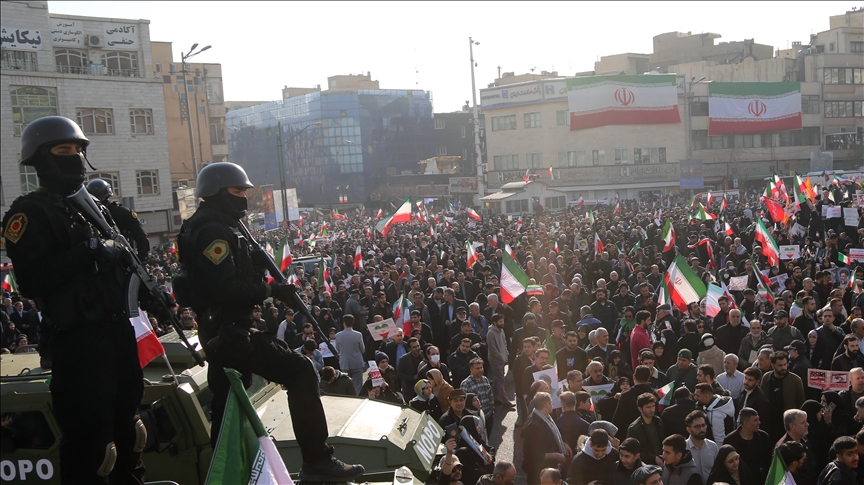
Photo credits: Anadolu Ajansi

[paywall layout_id=”1906″ service_tags=”TMA,FP” preview=”true”]

Since mid-January, Sinhala media have sporadically reported on the protests in Iran. This coverage spanned print, television, and social media commentary. Conversations and narratives on social media platforms were tracked and analysed using specialised monitoring tools.[1]

This week’s analysis is set out under two headings.

What was the key event that captured public attention?

Dec. 28: Protests broke out in two major markets in downtown Tehran, after the Iranian rial plunged to 1.42 million to the US dollar, a new record low, compounding inflationary pressure and pushing up the prices of food and other daily necessities.

Jan. 2: US President Donald Trump wrote on his Truth Social platform that if Iran “violently kills peaceful protesters,” the US “will come to their rescue.”

Jan. 8-9: The authorities carried out massacres of protesters, primarily on January 8 and 9.

Jan. 13: US President Donald Trump announced that countries doing business with Iran will face a 25 percent tariff on US imports.

As of the publication of this analysis, over 6,000 people have been killed as a result of the government’s crackdown on the protests.

What public sentiments does the Iran crisis evoke toward the US, Iran, and international institutions?

Sinhala media commentary on the Iranian protests has been marked by sustained criticism of international human rights institutions and Western states—particularly the US—for what is perceived as selective and inconsistent enforcement of international norms. Similar skepticism toward international organisations has been documented in earlier MPAs (Vol. 13, #39 and Vol. 13, #41), where Sinhala media discourse framed global institutions as politically constrained and morally inconsistent.

Three broad sentiments emerge: two critical and one supportive.

Critical sentiments

Sanctions seen as suffering: US sanctions are widely portrayed as collective punishment that disproportionately harms ordinary people (including through medicine shortages and reduced food affordability) more than the élite.

Within this framing, “maximum pressure” is understood less as legitimate diplomacy and more as punishment of the most vulnerable people in a population, without achieving meaningful political ends.  
Systems seen as selective:   International institutions and the “rules-based order” are depicted as unevenly applied—deployed to discipline weaker states, yet constrained or silent when powerful actors carry out the same or worse violations. This critique is not an outright rejection of a rules-based-order, but a deep skepticism based on the perceived asymmetry of how rules are applied in practice.

This sentiment resonates with Canadian Prime Minister Mark Carney’s recent address at the World Economic Forum, where he argued that the rules-based order has always been problematic, with trade rules enforced asymmetrically and international law applied with varying rigour depending on power and position – except that it still served the Western states and Western-aligned middle-powers to go-along, because they benefited.

Carney’s “revelation” to the world, reflects a sentiment that is not new, but familiar within the Sri Lankan Sinhala psyche. It is the basis on which international institutions expressing concerns on human rights in Sri Lanka have not had positive traction in the Sinhala media.

Supportive sentiment

Solidarity with sovereignty: Sympathy is directed at Iran as a civilisation and its people, with support for sovereignty and non-intervention, but without any explicit endorsement of the regime’s ideology. This position separates people from the state and frames dignity and self-determination as the priority: external pressure is rejected not because internal governance is defended, but because change is seen as requiring domestic legitimacy rather than foreign compulsion


[1] The MPA team monitored Facebook profiles, TikTok handles and YouTube channels using Junkipedia for the keywords Iran, Iran protests and Iran crisis in Sinhala from January 19 to 24, 2026.

To view this week’s news summaries, please click here.

To view this week’s social media data, please click here.

[/paywall]