Contestation on two appointments and one suspension—what they cost the government

January 26, 2026 – February 1, 2026 | Vol.16, #4 | ISSN 3084-9330

Photo credits: Sri Lanka Mirror

[paywall layout_id=”1906″ service_tags=”TMA,FP” preview=”true”]

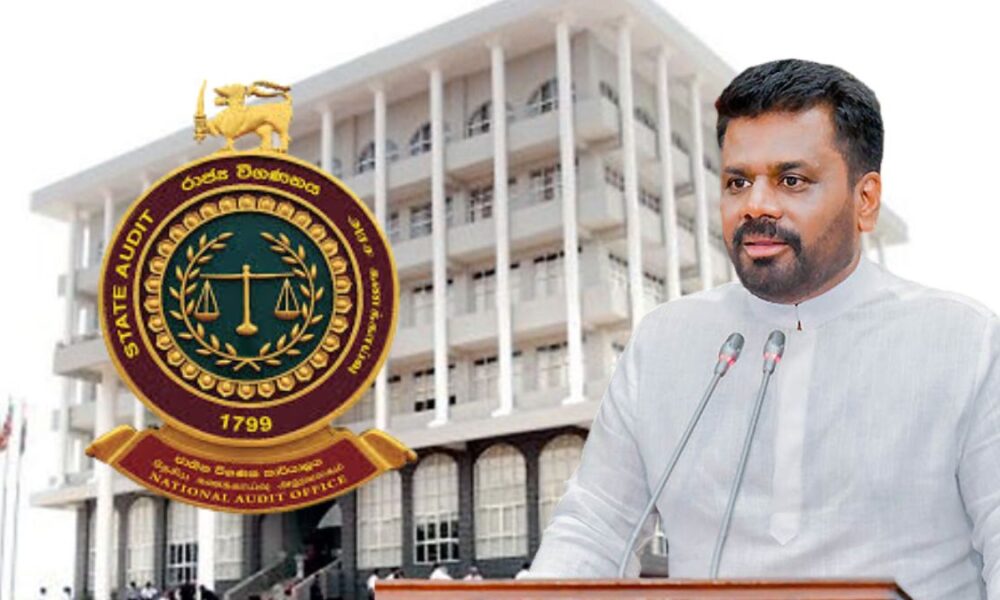
Over the past two weeks, Sinhala media attention centred on disruptions affecting three key state offices: the ongoing deadlock over the appointment of the auditor general; renewed contestation around the attorney general amid slow-moving, high-profile cases; and the suspension of the deputy secretary general of parliament.

Coverage spanned print, television, and social media commentary. Conversations and narratives on social media platforms were tracked and analysed using specialised monitoring tools.[1]

This week’s analysis is set out under three headings.

What were the key events that captured public attention?

The ongoing issues concerning the offices of the auditor general, the attorney general, and the deputy secretary general of parliament drew sustained public attention.

On the office of the auditor general:

Since the retirement of Auditor General W.P.C. Wickramaratne in April 2025, Sri Lanka has had no permanent auditor general.

May 25, 2025: The Constitutional Council (CC) approved G.H.D. Dharmapala to serve as acting auditor general for six months.

November 21, 2025: The CC rejected the president’s proposal to extend Dharmapala’s acting tenure by a further three months.

December 17, 2025: The CC rejected the president’s fourth recommendation to appoint Sri Lanka Army officer Col. O.R. Rajasinghe as auditor general.

December 24, 2025: Cabinet Spokesperson Nalinda Jayatissa urged the CC to appoint a new auditor general without delay, warning the delay was eroding confidence in key state institutions and weakening public finance oversight.

January 27, 2026: Senior Buddhist prelates wrote to President Anura Kumara Dissanayake urging the appointment, without delay, of a qualified senior officer from within the Auditor General’s Department.

On the office of the attorney general:

January 20: The Bar Association of Sri Lanka warned that social media campaigns and planned public actions targeting Attorney General Parinda Ranasinghe Jr. risk undermining the independence of the office.

January 21: A silent protest was staged outside the Colombo High Court calling for Ranasinghe’s removal. On the same day, Ranasinghe Jr. stated that he is not above the law, and that any mistaken decision by him can be challenged in court.

January 22: Minister of Justice Harshana Nanayakkara claimed that there had been no cabinet discussion on removing the attorney general.

On the office of the deputy secretary-general of parliament:

January 23: Deputy Secretary General and Chief of Staff of Parliament G.K.A. Chaminda Kumara Kularatne was suspended following concerns about his appointment.

January 27: Cabinet Spokesperson Nalinda Jayatissa said the suspension followed findings by an inquiry committee appointed in August 2025 to examine Kularatne’s appointment. He added that the Parliament Staff Advisory Committee found Kularatne had furnished false information during his appointment.

January 28: The opposition, including the SJB, alleged the suspension process was flawed and unlawful, and said it violated established parliamentary procedures.

February 2: Kularatne lodged a complaint with the Commission to Investigate Allegations of Bribery or Corruption alleging corruption against Speaker Jagath Wickramaratne, claiming his suspension stemmed from a personal dispute rather than official reasons.

Among the three issues, media coverage was highest for the suspension of the deputy secretary general of parliament, followed by developments concerning the attorney general. The deadlock over appointing an auditor general received the least coverage.

How did it impact the government?

The government’s reputational exposure across these issues falls along two analytic framings: integrity and paralysis. While all three developments generated scrutiny, they pose uneven reputational costs, shaped by the gap between media attention and institutional impact.

Across the three issues, the government faces uneven reputational exposure. Despite receiving comparatively limited media coverage, the auditor general deadlock carries the highest reputational cost. It is read either as a problem of political integrity, or as a problem of system paralysis. The integrity concern centres around executive overreach—where repeated nominations are interpreted as executive pressure to secure a preferred outcome, politicising an independent oversight office. The paralysis concern centres around the inability within the system to unblock a jammed appointment process and deliver a reasonable outcome. Both readings weaken the government’s reform credibility.

The attorney general contestation presents the next strongest reputational challenge for the NPP’s justice and anti-corruption agenda. Here, the government faces a no-win optics problem: maintaining distance (hands off) can appear weak or complicit when high-profile cases stall, while perceived intervention (hands on) can be framed as political interference in a quasi-judicial function. In an environment oriented toward outcomes and delivery, both positions carry reputational costs.

By contrast, the suspension of the deputy secretary general of parliament carries the lowest reputational impact. It is largely interpreted as a procedural and institutional-functioning issue rather than a test of reform intent. Competing readings frame the suspension either as a failure of due process or as an enforcement of due discipline, raising expectations around fairness and functional norms.

The table below sets out the competing frames for each development and their associated reputational implications for the government.

Why do some of these institutional concerns carry limited political cost for the government?

Despite the reputational impact, these institutional concerns have produced limited political damage for the government. This gap is shaped less by the substance in question than by how issues are framed and covered. Two dynamics, in particular, reduce political traction: supporter framing that recasts criticism as political attacks, and media attention that is misaligned with institutional stakes.

Supporter framing dynamic: Supporters of the government—particularly on social media—often interpret criticism as an opposition attempt to weaken the administration rather than as evidence of institutional failure. This supports a defensive posture and shifts responsibility to other actors, deflecting accountability pressure on the government. In the auditor general appointment deadlock, delays are attributed to the CC, deflecting attention from the government’s behaviour and muting demand for a substantive resolution.

Media coverage dynamic: Media attention—particularly in the press and on television—is not correlated with the level of social concern. The suspension of the deputy secretary general of parliament received high coverage despite relatively low concern, while the auditor general deadlock—a higher-concern governance issue—received comparatively limited attention. This pattern of media attention tends to shift public attention away from higher-stakes issues for the government towards lower-stakes issues with less substantive concerns.


[1] The MPA team monitored Facebook profiles, TikTok handles and YouTube channels using Junkipedia for the keywords deputy secretary general, Chaminda Kularatne, attorney general, and auditor general in Sinhala from January 26 to 30, 2026.


To view this week’s news summaries, please click here.

To view this week’s social media data, please click here.

[/paywall]