February 26, 2026 – March 3, 2026 | Vol.16, #9 | ISSN 3084-9330

Photo credits: Ada Derana
[paywall layout_id=”1906″ service_tags=”TMA,FP” preview=”true”]
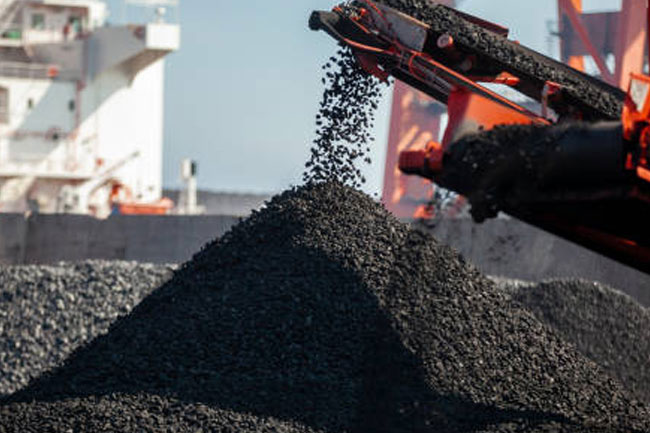
Over the past week, Sinhala media focused on allegations that coal imported for the Lakvijaya Coal Power Plant in Norochcholai was substandard.
Coverage spanned print, television, and social media commentary. Social media conversations and narratives were tracked and analysed using specialised social media monitoring tools.[1]
This week’s analysis is set out under three headings.
1. What was the key event that captured public attention?
Feb. 19: The Ceylon Electricity Board (CEB) notified the Parliamentary Sectoral Oversight Committee on Infrastructure and Strategic Development that coal received in eight shipments for the Norochcholai Power Plant did not meet quality specifications, and estimated a direct loss of Rs. 7.6 billion.
Feb. 27: Opposition Leader Sajith Premadasa claimed that the use of allegedly substandard coal had caused significant financial losses and called for an open investigation, warning that the cost should not be passed on to electricity consumers.
In subsequent media commentary, opposition figures alleged that the coal procurement process had been manipulated to favour a specific supplier. The government, by contrast, maintained that procurement procedures were followed and that penalties were imposed once quality deviations were detected.
Thus, the coal issue moved beyond a technical procurement question into a wider debate about whether the incident reflected corruption or administrative incompetence.
2. How is the government impacted?
The Sinhala media discourse on the coal importation issue centred on a clash between allegations of corruption and assertions of procedural compliance, placing the government under scrutiny for both integrity and competence in procurement decision-making.
Opposition voices portrayed the substandard coal as a deliberate, “crony-driven” deal designed to exploit the state. The government, by contrast, countered with assertions of compliance, arguing that rigorous adherence to procurement protocols—and the imposition of fines once quality deviations were detected—demonstrates a functioning, transparent system.
However, even where corruption is not accepted as proven, the incident still exposes the government to a second line of attack: procedurally correct, but practically incompetent. As observed in past issues of MPA, incompetence has been the most consistent attack on the NPP government.[2]
The critique that sticks the most is that the process, even if “clean” (giving the government the benefit of the doubt), did not deliver an acceptable outcome. This results in the government being seen as practically incompetent, even if procedurally correct. That is, even if it may have followed the rules, it lacks the ability to get effective results.
3. What was the media reception of the coal issue?
The Sinhala media commentary on the coal issue was highly polarised, with government-aligned voices asserting procedural compliance and opposition voices alleging corruption.
The key features of these competing narratives in Sinhala media discourse are provided in Table 1 below.
Privately owned television channels and newspapers appeared to give significantly greater prominence to the corruption-allegations narrative.
Table 1: Key features of the Sinhala media discourse

The divergence in these narratives suggests that for the NPP, procedural “cleanliness” alone is no longer a sufficient defence. As the debate shifts from compliance to competence, a critical gap emerges. This allows the opposition to frame the government as technically honest but strategically overmatched, demonstrating that a “clean” process can still yield a “dirty” outcome.
[1] The MPA team monitored Facebook, TikTok, and YouTube using Junkipedia for the keywords coal and substandard in Sinhala from February 23 to March 3, 2026.
[2] See MPA Vol. 16, #2.
To view this week’s news summaries, please click here.
To view this week’s social media data, please click here.
[/paywall]