The US–Israel–Iran War: Pre-existing dispositions resurface and harden

March 2, 2026 – March 8, 2026 | Vol.16, #10 | ISSN 3084-9330

Photo credits: Tamil Guardian

[paywall layout_id=”1906″ service_tags=”TMA,FP” preview=”true”]

Over the past week, Sinhala media focused on the United States (US)–Israeli air and missile strike on Iran.
 
The coverage spanned print, television, and social media commentary. Social media narratives and conversations were monitored and analysed using specialised digital tracking tools.[1]
 
This week’s analysis is set out under three headings.


 1. What was the key event that captured public attention?

Feb. 28: The US and Israel launched a large-scale air and missile strike on Iran. Iran retaliated with missile and drone strikes on targets in Israel and in Middle Eastern countries hosting US military bases, including Qatar, Kuwait, the United Arab Emirates, Saudi Arabia and Bahrain.

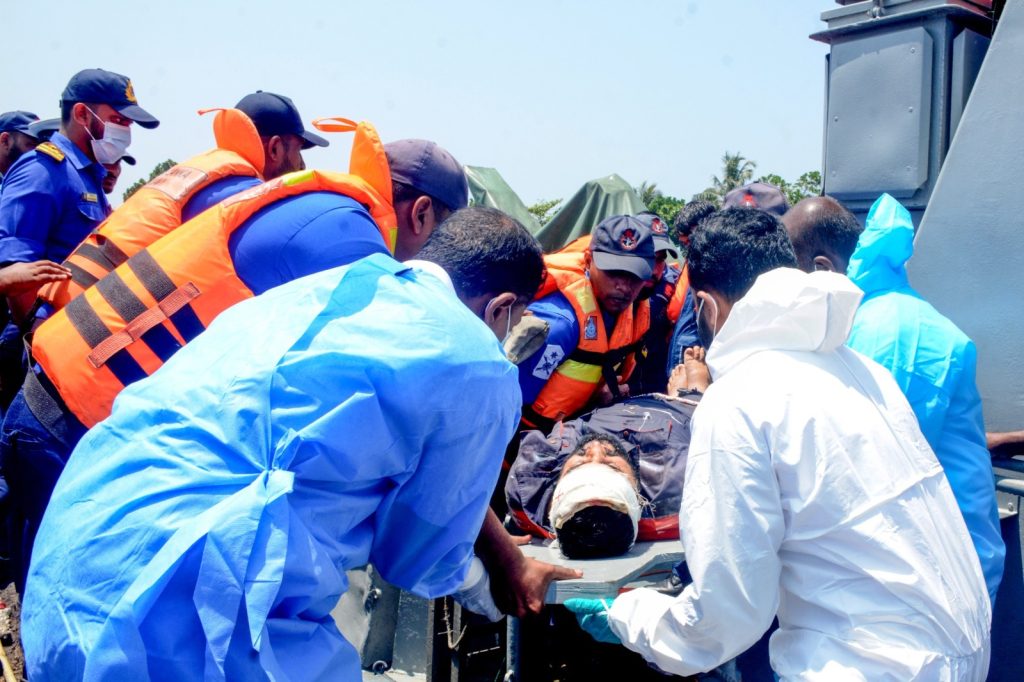
Mar. 4: A US submarine torpedoed the Iranian vessel IRIS Dena off Sri Lanka after it had left India, where it had participated in naval exercises alongside two other Iranian vessels. The Sri Lanka Navy rescued 32 survivors and recovered 87 bodies.

Mar. 5: President Anura Kumara Dissanayake authorised the navy to bring a second Iranian vessel, IRIS Bushehr, to the Colombo Port to disembark its 208 crew members and move the ship to the Trincomalee Harbour. Dissanayake emphasised that Sri Lanka would remain neutral while acting on humanitarian grounds and in line with its international obligations.

Mar. 7: At the Raisina Dialogue in India, Foreign Minister Vijitha Herath responding to a moderator’s question on the fate of the rescued Iranian sailors, repeatedly stated: “I want to reiterate UNCLOS [referring to the United Nations Convention on the Law of the Sea]… we are following those international laws… we have taken all steps according to international laws.”

The Sinhala media discourse surrounding the US–Israel–Iran war crystallised around recurring interpretations shaped by geopolitical scepticism and domestic economic anxiety. In this week’s MPA, we map the main subjects of attention in that discourse and the narratives underpinning them.

2. What is the Sinhala media discourse on the US–Israel–Iran war?

Sinhala media discourse on the war reflects strong cynicism toward the US and Israel, mixed sympathy toward Iran, and deep concern about Sri Lanka’s economic vulnerability to Middle Eastern instability. The discourse also turns inward, criticising the middle class for panic buying fuel and the opposition for spreading distorted narratives during the crisis.

The main subjects of attention, the sentiment attached to them, and the underlying narratives that appear to shape these sentiments in this discourse are mapped out in the following table.

Table 1: Sinhala media discourse on the US–Israel–Iran war

Subject of attentionSentiment in Sinhala media discourseUnderlying narrative shaping the sentiment
United States and President Donald TrumpCynicism toward US exceptionalismSinhala media discourse reflects a long-standing predisposition to view the US as operating above international law and using military escalation to secure strategic energy routes and geopolitical dominance.

In addition, as noted in past MPA issues, some segments of the Sinhala media had previously admired Donald Trump’s “strongman” leadership.[2] That admiration appears to have weakened as the conflict’s economic risks—particularly maritime insecurity and potential fuel shocks—have become more immediate for Sri Lanka.
IsraelCynicism toward Israeli military conductSinhala media discourse currently portrays Israel as using disproportionate military force with limited regard for wider consequences, particularly economic instability and the vulnerability of migrant workers from smaller states.

This marks a shift from an earlier, albeit marginal, sentiment present in some segments of the Sinhala media that admired Israel through a lens of technological advancement, military strength, and national success.[3] That earlier admiration appears to have weakened as the strikes have foregrounded the human and economic costs of Israeli military action.
IranMixed framing: Scepticism and sympathyWhile Sinhala media discourse remains sceptical of Iran’s governance, particularly its alleged backing of Muslim militant groups, it often portrays Iran as a smaller state confronting Western military power and intervention.

This sympathetic lens is rooted in a shared sensitivity toward national sovereignty. By framing Iran’s struggle against “Western overreach” as parallel to Sri Lanka’s own experiences with international pressure—specifically regarding the UNHRC—the discourse casts Iran as a symbol of resistance to external interference.
Sri Lankan middle classCriticism of panic behaviourThe Sri Lankan middle class is criticised for panic-buying fuel, a failure of collective responsibility that risks producing the very shortages people seek to avoid, echoing public anxieties rooted in the 2022 economic crisis.
Sri Lankan oppositionCriticism of political conductSections of the opposition are portrayed as circulating exaggerated or misleading claims about the war and its impact on Sri Lanka, especially in relation to the rescue of the two Iranian vessels.[4] This conduct attracted strong criticism in social media commentary.
Sri Lankan economyConcern about economic vulnerabilityMedia commentary highlights Sri Lanka’s dependence on foreign remittances, oil imports, and maritime trade routes, portraying the country as economically exposed to instability in the Middle East.

3. How does the US-Israel-Iran war impact the government?

The war initially strengthened the government’s public standing through its humanitarian and non-aligned response, but this momentum was partly diluted by renewed scrutiny of how effectively Sri Lanka’s position was articulated in international forums.

The authorisation of the Sri Lanka Navy to rescue the crew of the two Iranian vessels positioned President Anura Kumara Dissanayake and the government as active, compassionate, and non-aligned humanitarian actors, generating strong positive traction in Sinhala media discourse.

While the rescue operation earned widespread praise, the positive momentum was partly diluted by the government’s international engagement. At the Raisina Dialogue, Minister Vijitha Herath reiterated that Sri Lanka acted in accordance with UNCLOS; however, criticism focused on his difficulty in managing the moderator’s questioning. The manner in which he engaged at the forum drew criticism for a perceived lack of diplomatic competence.

This revived a familiar narrative in Sinhala media discourse: that while the government’s actions may be diplomatically sound, its representatives struggle to project competence in international forums. At the Raisina Dialogue, the criticism of Minister Herath—which at times included mockery over his English proficiency—focused on his inability to effectively articulate the government’s position (please see memes published in this issue of MPA). Similar reactions followed Minister Sunil Handunnetti’s appearance at a World Economic Forum panel discussion, previously analysed in an MPA, where criticism centred less on language ability and more on perceived gaps in clarity and preparedness in representing Sri Lanka internationally.[5]


[1] The MPA team monitored Facebook, TikTok, and YouTube using Junkipedia for the keywords Iran, supreme leader, Trump, oil, ship and Anura Kumara in Sinhala from March 2 to 8, 2026.
[2] See MPA Vol. 15, #27 & 28. 
[3] See MPA Vol. 15, #23. 
[4] For more information, see: https://www.dailymirror.lk/breaking-news/Absolute-lies-on-Middle-East-war-being-spread-through-social-media-Minister/108-334625.

[5] See MPA Vol. 15, #25.


To view this week’s news summaries, please click here.

To view this week’s social media data, please click here.

[/paywall]