February 9, 2026 – February 22, 2026 | Vol.16, #6 & 7 | ISSN 3084-9330

Photo credits: Ada Derana
[paywall layout_id=”1906″ service_tags=”TMA,FP” preview=”true”]
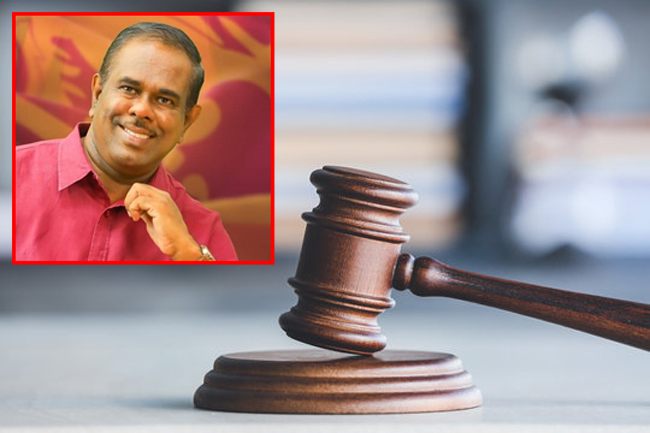
Over the past fortnight, Sinhala media primarily focused on the court verdict on the killing of the former MP Amarakeerthi Athukorala. We analysed content across print, television, and social media, using a specialised social media monitoring tool.[1]
This week’s analysis is set out under three headings.
1. What was the key event that captured public attention?
Feb. 11: Twelve individuals, who were found guilty over the murder of former Polonnaruwa District Member of Parliament Amarakeerthi Athukorala and his security officer in 2022, were sentenced to death.
Context: Sri Lanka was amid widespread mass uprisings known as the aragalaya, triggered by a severe economic crisis and public anger at the then government in 2022. Athukorala and his personal security officer were travelling in Nittambuwa when their vehicle was blocked by protesters. According to multiple reports, shots were fired during the confrontation. Some accounts report that Athukorala or his security officer fired at people blocking their vehicle, injuring at least two protesters. Athukorala and his security officer then fled to a nearby building. Later, they were found dead inside that building, having been attacked by a mob.
Feb. 23: Following the sentencing, the families of the 12 convicts arrived at the Presidential Secretariat to seek President Dissanayake’s intervention.
Sinhala media discourse on the court verdict shows that it has prompted a reassessment and renewed contestation of how the aragalaya has been understood since 2022. Aragalaya-aligned voices frame the movement as largely a peaceful civic intervention; for others, it reinforces claims that it enabled violence. The verdict —and the subsequent appeal for a pardon—thus becomes a test of whether the post-2022 order can reconcile its reliance on the aragalaya as a transformative civic and peaceful moment.
2. What was the public response to the court verdict?
Responses to the court verdict reveal a deeper tension in how the aragalaya is being integrated into the country’s political memory. One strand is primarily attentive to the risk of selective law enforcement; the other is primarily attentive to the risk of normalising mob violence under the cover of political mobilisation.
These two narratives on the court verdict will be briefly analysed below.
Narrative I: Selective enforcement narrative
Aragalaya-aligned voices frame the verdict through a selective-accountability lens.
In this narrative, advanced by those sympathetic to and supportive of the aragalaya, law enforcement is characterised as uneven. They cite a disparity between the prosecution of aragalaya activists and the relative impunity afforded to others.
Proponents of this narrative argue that violence occurring as a direct consequence of systemic failure or counter-violence to state provocation should not be met with legal penalty when the original instigators remain unpunished.
Two specific incidents are frequently cited to illustrate this deficit in accountability:
- May 9, 2022: The attacks on peaceful protesters by Rajapaksa supporters served as the catalyst for subsequent unrest.
- July 22, 2022: The security operation directed by the Wickremesinghe administration to forcibly clear Galle Face Green, despite the demonstrators’ signalled intent to vacate the site voluntarily.
By setting these incidents against current prosecutions, the narrative casts the judicial process as an instrument of selective law enforcement—targeting the aragalaya for its reactions to violence while state-aligned violence is seen as escaping similar scrutiny.
Narrative II: Rule of law narrative
SLPP-aligned voices, among others, frame the verdict through a rule of law lens.
In this narrative—advanced by several groups, including but not limited to the SLPP and its affiliated voices—the verdict is framed as a public rule-of-law signal: political grievance, however widely shared, does not reduce criminal culpability for murder. The emphasis is on individual culpability, those involved cannot rely on being part of a crowd to avoid liability; each person is answerable for what they did. The verdict is therefore treated as a warning against any expectation that violence committed during the aragalaya can be excused or softened by invoking the protest context.
In this framing, the aragalaya is remembered as a moment when the rule of law was strained and the state’s authority was openly challenged. The verdict is read as asserting that the punishment is decided by courts, not by crowds. It rejects the idea that public anger can replace the legal process.
3. How is the government impacted?
The government is currently operating under pressure from two sides.
On the one hand, it operates within a political space created and necessitated by the aragalaya. As the current administration rose to power on the back of the mass uprisings of 2022, the movement functioned as the primary catalyst for the current political transition. Consequently, any state effort to delegitimise the aragalaya risks inadvertently delegitimising the administration itself.
On the other hand, the government faces the institutional burden of upholding a reputation for impartial justice and the rule of law. This is complicated by the historical framing of the JVP. During the aragalaya, then state-aligned voices frequently portrayed the JVP as the architect of the movement’s violence, leveraging the party’s historical legacy to frame the protests as a vehicle for organised unrest.[2]
This historical framing complicates the current government’s position, as it must now balance these past characterisations with its present need to uphold a reputation for impartial justice.
The families’ appeal for a pardon intensifies this dilemma: any perception of excusing or overlooking the killing of a legislator risks eroding public confidence in the fair application of the law, even when such acts occur during periods of widespread social upheaval.
[1] The MPA team monitored Facebook, TikTok, and YouTube using Junkipedia for the keywords Amarakeerthi and aragalaya in Sinhala from February 9 to 22, 2026.
[2] See TMA, Vol. 12, #19; Vol. 13, #20
To view this week’s news summaries, please click here.
To view this week’s social media data, please click here.
[/paywall]