January 5, 2026 – January 11, 2026 | Vol.16, #1 | ISSN 3084-9330

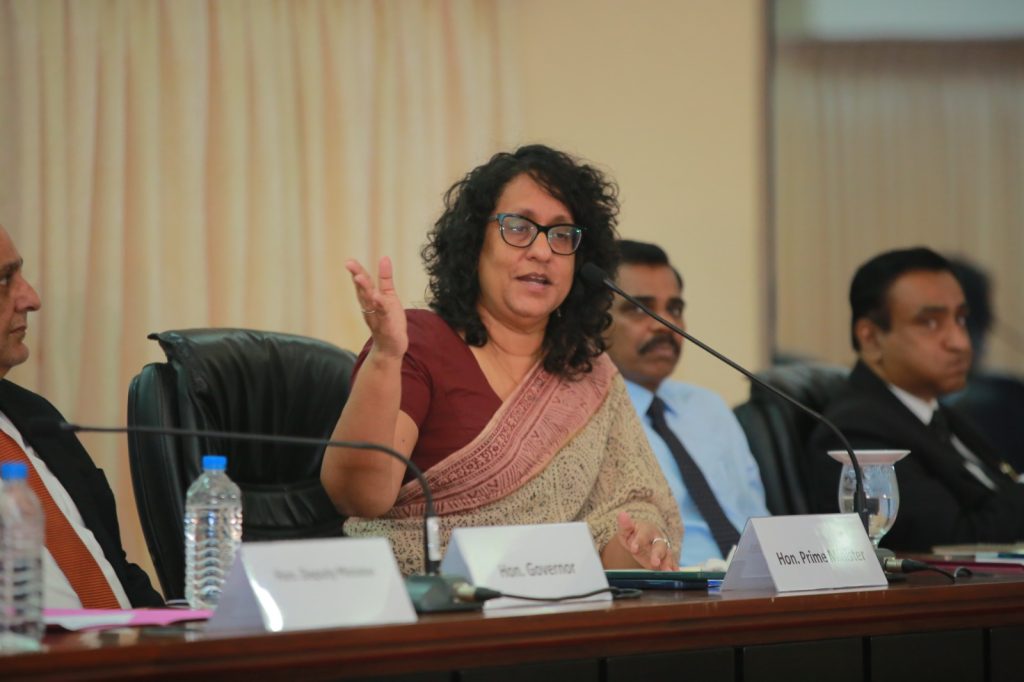
Photo credits: Website of the prime minister’s office
[paywall layout_id=”1906″ service_tags=”TMA,FP” preview=”true”]
Over the past weeks, Sinhala media primarily focused on the government’s education reforms and the issue that arose after a link to a same-sex website was discovered in the Grade 6 English module.
This coverage spanned print, television, and social media commentary. Conversations and narratives on social media platforms were tracked and analysed using the Junkipedia monitoring tool.[1]
This week’s analysis is set out under three headings.
What was the key event that captured public attention?
Late December 2025: A social activist (Tilini Shalvin) highlighted that an error in the Grade 6 English module redirected users to an unintended website, rather than the intended educational resource.
December 30, 2025: The Ministry of Education suspended distribution of the Grade 6 English module and initiated an internal inquiry.
December 31, 2025: Education Ministry Secretary Nalaka Kaluwewa lodged a complaint with the CID, stating there was reasonable suspicion of sabotage.
January 2, 2026: The Director General of the National Institute of Education, Prof Manjula Vithanapathirana, temporarily stepped aside pending inquiry.
January 4, 2026: At a media briefing, Minister Vijitha Herath stated that an internal fact-finding committee had submitted its report and that necessary action will be taken on the basis of its findings. At the same briefing, Prime Minister and Education Minister Harini Amarasuriya described the issue as a “serious blunder.”
January 7, 2026: The Opposition began collecting signatures for a no-confidence motion against Amarasuriya.
January 13: As of the time of writing this MPA, Cabinet Spokesperson Nalinda Jayatissa stated that the government has decided to implement the proposed education reforms for Grade 6 students starting in 2027, rather than 2026.
Despite the government’s steps to investigate the error, Sinhala mainstream and social media commentary have continued to criticise the government — and in this analysis, we examine why the incident has been interpreted as more than a contained publication mistake.
Why has Sinhala mainstream and social media commentary remained critical of the government despite the steps taken to investigate the error?
Criticism has remained directed at the government on two grounds: i) the incident has been framed as a breach in child-safety rather than a routine publication error; and ii) it has been read as evidence of weak quality assurance and internal controls within the education system after the link became publicly associated with same-sex content. These two framings converged and reinforced each other, elevating the perceived seriousness of the lapse beyond a technical mistake. Subsequent Sinhala media discourse was therefore dominated by commentary that extended the issue to questions about the perceived direction and credibility of education reform.
Safety frame: child protection and moral risk
Within this framing, the incident is treated primarily as a risk to child-safety. The emphasis falls on how an official learning resource could create a pathway to inappropriate online material, and what that implies about the state’s protective duties. Given the moral weight attached to schooling, even a technical lapse can be understood as a serious breach of responsibility, especially where children are concerned.
Systemic frame: governance and reform credibility
Within this framing, the issue is read as evidence of broader institutional weakness. The emphasis falls on weak quality control, inadequate internal checks, and an education reform process already exposed to criticism around competence, consultation, and implementation standards. The focus is less on the specific content and more how confidence has been undermined with regard to going ahead with the reforms. .
Convergence of framings
Because the incident arose within education—a sector that carries high public expectations alongside high moral salience—purely technical explanations struggled to gain traction. The risk-to-child-safety frame raised the stakes by centring the failure of state protective duties towards children. The systemic frame then explained how such a lapse could plausibly occur, citing weak quality assurance and internal controls.
How does Sinhala media discourse diverge from the English press?
The English press commentary as captured on The Sunday Times’ political column published on January 4, 2026[2] treats the issue primarily as a procedural blunder amplified by opposition attack. An analysis of the Sinhala-language commentary sheds light on why the issue gains so much negative traction and continues to “stick” and scale.
In Sinhala media discourse, criticism is anchored in child safety and governance: why children were directed online at all, and how such a lapse cleared institutional checks in a sensitive sector such as education, where trust is essential. Once the link became publicly associated with same-sex content, Sinhala commentary frequently widened the issue into a suspicion—rather than an evidenced claim—that the political leadership represents an ideological stance misaligned with traditional societal values, and that education reform could be used to quietly undermine those traditional value commitments even without overtly radical policy shifts.
In this context, anything perceived to expose children to sexual content constitutes a serious breach of trust, which helps explain the persistence and intensity of the backlash despite the error being widely understood as unintentional.
[1] The MPA team monitored Facebook profiles, TikTok handles and YouTube channels using Junkipedia for the keywords reforms, education, Harini, and same sex in Sinhala from January 5 to 11, 2026.
[2] Gay website for Grade-Sixers: A textbook case of government under fire | Print Edition – The Sunday Times, Sri Lanka
To view this week’s news summaries, please click here.
To view this week’s social media data, please click here.
[/paywall]