Education reforms: Schooled on legitimacy

July 14, 2025 – July 20, 2025 | Vol.15, #26 | ISSN 3084-9330

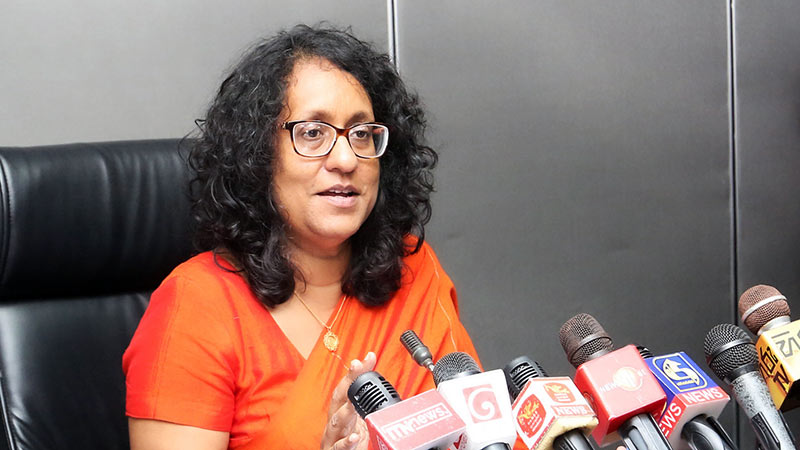
Photo credits: ONLANKA

[paywall layout_id=”1906″ service_tags=”TMA,FP” preview=”true”]

Over the past week, concerns about the proposed education reforms dominated discourse in the Sinhala media – across print, television and social media (as analysed using Junkipedia).[1] 

This week’s analysis is set out under four headings.

I. What were the key events that captured public attention?

March 3: Prime Minister Harini Amarasuriya announced that new education reforms will be launched in 2026, with the preparatory process set to begin in 2025.[2]

July 11: The first awareness programme on the proposed education reforms, scheduled to be implemented from the year 2026, was held at the parliament under the patronage of PM Harini Amarasuriya.[3]

Media reports indicated that History and Aesthetics might be removed from the school curriculum – provoking strong reactions from educators, civil society and the public.[4]

July 17: In response to criticisms, the prime minister stated that History and Aesthetics are available as electives.[5]

    II. What is the significance of this topic?

    In Sri Lanka, where formal education remains one of the few pathways to upward social mobility, any proposed change to the national curriculum carries significant social and political weight.

    While there is broad, principled agreement that Sri Lanka’s education system is in urgent need of reform, the issues surrounding the proposed changes stem primarily from the process by which they have been introduced.

    Concerns have centred on the lack of transparency, insufficient consultation and limited public engagement – highlighting that the credibility of reform depends not only on its content but also on the process through which it is pursued

    The backlash also reflects a deeper concern about disciplines such as History and the Arts. Subjects such as Mathematics, Science and Technology continue to be regarded as prestigious and economically productive, while the humanities tend to be often sidelined as non-essential. This perception reinforces a cultural hierarchy in education – and has contributed to the polarised response to these reforms.

      III. Why have these reforms provoked such a strong response?

      What seems to be particularly shocking about the recent education reforms, framed in media discourse as if History and Aesthetics have already been removed, is that they are being introduced by an NPP-led government. The NPP had positioned itself as a break from past administrations. The surprise, then, does not seem to be just about what the reforms propose, but about who is proposing them (please see cartoons published in this issue of MPA).

      In the past, similar proposals – such as the suggestion to remove literature from the curriculum in the 1970s, captured in the infamous phrase “සාහිත්‍ය කන්නද?” (saahithya kannada?meaning  “what is the value in learning literature?”) – provoked widespread public outrage at the time.  But coming from a party that many believed would challenge that kind of thinking, the reforms appear to be especially unexpected – and, to many, deeply disappointing.

        IV. How do the proposed reforms challenge the legitimacy of the government?

        The legitimacy of the government faces two challenges as outlined below.

          1. Ideological misalignment with national identity

          A key criticism stems from the perception that the NPP government is ideologically disconnected from the country’s cultural and religious heritage – particularly the Sinhala-Buddhist ethos.

          A key criticism of the NPP government stems from the perception that it is ideologically disconnected from the country’s Sinhala-Buddhist heritage, which has long been central to Sri Lanka’s national identity. Media reports suggesting the removal of History and Aesthetics from the curriculum have reinforced this view, framing the reforms as emblematic of a technocratic modernism that sidelines cultural and national traditions.

          In the past, the NPP has been portrayed as a secular party that may undermine Sinhala-Buddhist cultural values or identity. The currency for this framing draws on the perception of the JVP being the least likely political party to champion Sinhala-Buddhist interests.[6]

          As such, the government continues to be framed as one that disrespects and even seeks to uproot national heritage, thereby weakening its substantive legitimacy.

            How does the framing of the PM exacerbate this challenge?

            As the minister overseeing education, the prime minister has naturally become the central figure associated with the reforms. Meanwhile, the president is often portrayed as someone with humble origins, positioning him differently in the public imagination.

            Within media narratives that interpret the education reforms as effectively removing History, the PM is at times framed as a liberal élite – positioned as somewhat removed from the cultural values of the Sinhala-Buddhist majority, despite her alignment with socialist ideals. This perception does not amount to a broad rejection, but it can surface in moments when the interests of a specific class seem to be overlooked.

            2. Lack of transparency 

            The government’s approach to implementing curriculum reforms has also been criticised for its lack of transparency and inclusiveness in the process.

            Critical voices have argued that the reforms are being implemented with minimal consultation or participation from key stakeholders – including educators and civil society. This top-down approach highlights a growing disconnect between policymakers and the broader public, reflecting a lack of sensitivity to the social, cultural and political dimensions of education.

            Looking ahead

            The challenges of ideological disconnect and lack of transparency may begin to lose traction when credible clarifications enter public discourse. What may initially appear as significant concerns – whether about the content of the reforms or the process by which they were introduced – can become less relevant or even redundant once the underlying assumptions are addressed and misunderstandings are resolved.


            [1] The MPA team monitored Facebook profiles, TikTok handles and YouTube channels using Junkipedia for the keywords Harini, education and reforms in Sinhala, from July 14 to 18, 2025.

            [2] https://www.parliament.lk/news-en/view/4435.

            [3] https://island.lk/pm-presents-proposed-education-reforms-to-mps/ and https://www.srilanka.org.tr/prime-minister-presents-parliamentarians-on-proposed-new-education-reforms_4-1106.

            [4] https://www.lankaweb.com/news/items/2025/07/18/grades-1-5-without-history-the-education-ministrys-dangerous-neglect-of-national-heritage/ and https://www.vivalanka.com/newspage/12157028ai-controversy-over-removal-of-history-and-aesthetics-from-2026-curriculum.

            [5] https://www.dailymirror.lk/breaking-news/Three-subjects-made-mandatory-under-new-education-reforms-PM/108-314453 , https://www.dailymirror.lk/breaking_news/Three-subjects-made-mandatory-under-new-education-reforms-PM/108-314453, https://www.newswire.lk/2025/07/17/pm-responds-to-reports-on-history-subject/ and https://www.adaderana.lk/news.php?nid=110570.

            [6] See TMA Vol.09, #38; Vol.07, #22; Vol.13, #02 and 03.

            To view this week’s news summaries, please click here.

            To view this week’s social media data, please click here.

            [/paywall]