January 26, 2026 – February 1, 2026 | Vol.16, #4 | ISSN 3084-9330

Photo credits: Daily Mirror
[paywall layout_id=”1906″ service_tags=”TMA,FP” preview=”true”]
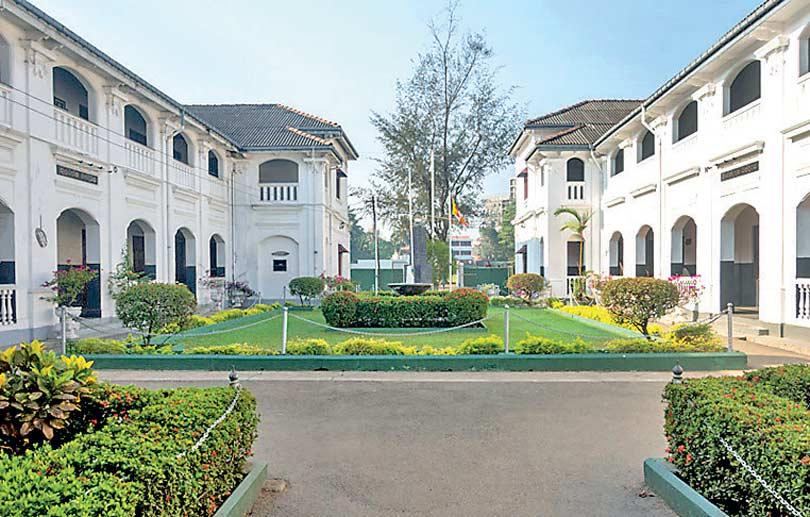
Over the past week, Sinhala media attention coalesced around #Nalandaleak—the non-consensual circulation of intimate images and videos reportedly involving the head prefect of Nalanda College, two teachers, and a parent.
Coverage spanned print and social media, with the most sustained discourse occurring on social media platforms (tracked using specialised monitoring tools).[1] The issue did not feature in primetime Sinhala television news bulletins.
This week’s analysis is structured under two headings.
What was the key event that captured public attention?
January 26: Intimate images and videos reportedly linked to the head prefect of Nalanda College, two teachers, and a parent began circulating online.
January 27: Secretary to the Ministry of Education Nalaka Kaluwewa instructed the principal of Nalanda College to submit a report on the issue.
January 28: Cabinet Spokesperson Nalinda Jayatissa warned that, if media and social media do not self-regulate on privacy and identity issues, the government would consider regulation through mechanisms such as the Online Safety Act.
This incident offers a window into public attitudes on how blame, protection, and reputation are distributed when allegations concerning sexual scandals go viral.
How did public sentiment react to the scandal?
Public interpretation was shaped by three overlapping dynamics: (i) a blurred victim–perpetrator frame, (ii) a gendered reading that positioned the student as a beneficiary, and (iii) Politics of protecting school reputation by protecting the reputation of the student. Together, these dynamics help explain why responsibility was unevenly allocated—and why student safeguarding concerns were marginal in the dominant discourse.
Globally, sexual scandals are often narrated through a victim–perpetrator divide: men are presumed to be perpetrators, while women are more readily positioned as victims. In this case, that familiar framing is unsettled. Public interpretation tended to treat the underlying conduct as consensual, with no clear victim foregrounded. While the age difference would normally elevate safeguarding concerns—particularly where one party was reportedly a high school student—these concerns remained peripheral rather than central to public interpretation.
Instead, popular discourse produced a reversal: the student was widely cast as the “orchestrator”, rather than as the party requiring protection. Because the student is male, interpretation was less likely to organise around respectability in the way it often does for women and girls. This yields a less moralised lens, making it easier to position him as a beneficiary of the incident rather than as blameworthy within it.
In Sinhala social media discourse, the student was presented as unusually “successful” for his age, described as a “වැඩ්ඩා” (wadda I a “clever/pro/expert” type figure), able to be with multiple women, including teachers. This masculine-status framing displaced attention from safeguarding and accountability, lowering scrutiny of the student while intensifying scrutiny of the adults involved.
The identity of the school—Nalanda College—further reinforced this dynamic. In Sri Lanka, the reputation of students (rather than teachers) tends to serve as the conduit for institutional reputation, and incidents involving schools can become arenas for school-based politics and reputational defence. In that environment, defending the student can function as defending the school’s name—dampening willingness to assign him blame, while sharpening condemnation directed at the adults involved.
Taken together, the incident also offers an analytical window into a possible cultural shift. Despite Sri Lanka’s conservative moral self-image—often associated with the stigmatisation of sexual scandal—the student is not only spared stigma but, in some readings, tacitly admired or presented as impressive.
This coverage suggests that lived norms in society, with regard to sexual mores, may be changing faster (and more radically) than the country’s conservative self-image implies.
That is, the social media reaction to this incident points to a growing disjuncture between publicly projected moral values and everyday lived practice. A younger generation shaped by internet access, digital communication, and expanded forms of personal freedom may represent a radical break from older conservative values than is typically acknowledged.
[1] The MPA team monitored Facebook profiles, TikTok handles and YouTube channels using Junkipedia for the keywords Nalanda, Nalanda College, Buddhini and teacher in Sinhala from January 26 to 30, 2026.
To view this week’s news summaries, please click here.
To view this week’s social media data, please click here.
[/paywall]