March 10, 2025 – March 16, 2025 | Vol.15, #11
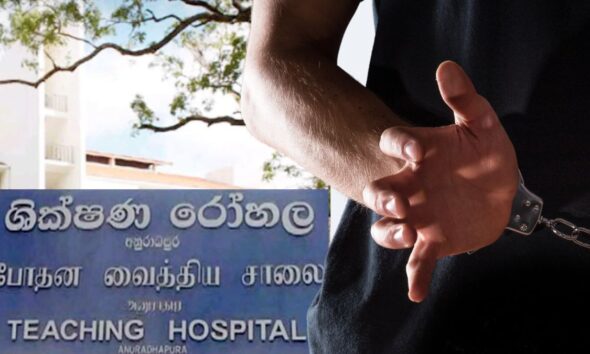
Event: Over the past week, the Sinhala media focused on the reported rape of a medical doctor in Anuradhapura and the warrant issued to arrest Deshabandu Tennakoon.
On the reported rape of a medical doctor in Anuradhapura:
On March 10, a female doctor attached to the Anuradhapura Teaching Hospital was reportedly raped in her hospital quarters.[1][2]
On March 11, the doctors attached to the Anuradhapura Hospital and the Government Medical Officers’ Association (GMOA) launched a strike demanding the suspect’s arrest.[3][4]
On March 12, the police apprehended an army deserter as the suspect in relation to the reported rape.[5][6] On the same day, the GMOA stated it would continue the strike even after the suspect’s arrest.[7][8] However, the GMOA called off the strike on March 13.[9][10]
On the warrant issued to arrest Tennakoon:
On February 28, the Magistrate’s Court in Matara issued a warrant for the arrest of Tennakoon in connection with a fatal shooting incident in Weligama in December 2023.[11][12]
On March 6, the Police Media Spokesperson Buddhika Manatunga announced that Tennakoon could not be located and was evading arrest.[13][14] Manatunga also urged the public to report any information regarding Tennakoon’s whereabouts to the CID.[15][16]

[paywall layout_id=”1906″ service_tags=”TMA,FP” preview=”true”]
Key insights:
- The media coverage of the reported rape of a doctor provides a window into understanding two exceptional societal attitudes in Sri Lanka toward medical doctors and criminal suspects.
- The special regard afforded to medical doctors in Sri Lanka may reflect a neo-caste structure within the social psyche.
- The widespread disdain towards the criminal suspect brought out illiberal attitudes that favoured severe punishment without regard to due process.
Analysis
Overview of media coverage
Over the past week, the Sinhala press reporting, TV coverage and social media commentary (as analysed through Junkipedia, a social media monitoring tool) expressed shock over the reported rape of a medical doctor.[1] Some privately owned media outlets, such as Hiru TV, were scrutinised on social media and in parliament for their unethical and sensational coverage of the incident.[2] The said TV channel telecast the incident dramatically, while some newspapers published the incident in detail.[3]
Two societal attitudes
The media coverage of the reported rape of the doctor provides a window into understanding two distinct societal attitudes toward the incident. This week’s MPA will explore these attitudes, representing opposing sentiments: (i) esteem towards medical doctors and (ii) disdain towards criminal suspects.
i. Esteem towards doctors
Within the Sri Lankan psyche, medical doctors hold a special and esteemed social status. Therefore, harm inflicted on a doctor can provoke outsized attention. The reported rape of a medical doctor in Anuradhapura sparked widespread outrage and gained more attention than other cases of sexual assault that are regularly reported.
However, the esteem towards medical doctors did not extend to the trade unions representing them. As highlighted in past issues of MPA, the Government Medical Officers’ Association (GMOA), one of the key trade unions representing medical professionals, has often been positioned negatively as entitled, privileged and driven by vested interests rather than being concerned about the public.[4] The GMOA’s initial decision to continue the strike, even after a suspect had been arrested, was criticised in the media.
ii. Disdain towards criminals
In contrast to the deference towards medical doctors, there appears to be a deep-rooted disdain for suspected criminals, especially individuals suspected of being involved in drug trafficking, organised crime and sexual crimes.[5] Such individuals are portrayed as an ‘evil’, a burden to society and deserving of being ‘done away with’.[6]
The public outrage in the aftermath of the reported rape of the doctor translated into calls for the reintroduction of the death penalty, and severe punishment of the suspect. The intimation that the suspect was tortured by the police was accepted with support for such actions.
Thus, in incidents such as these, segments of Sri Lankan society tend to embrace illiberal attitudes rejecting the need for due process or concerns for the rights of the suspect, and instead, condoning torture and endorsing capital punishment for people suspected of a certain level of criminality and considered a scourge to society.
Outside the dominant societal attitudes, a counter sentiment, albeit marginal, emerged from the left-leaning liberal space. Some voices within the NPP government, including Prime Minister Harini Amarasuriya and MPs Saroja Savithri Paulraj and Samanmalee Gunasinghe, seem to have adopted an egalitarian approach, avoiding a status-based preferential framing of the survivor of the reported rape.
Similar left-leaning liberal voices moved away from focusing on the profession of the reported rape survivor as a doctor and called for the protection of all women in society. These voices positioned rape as an issue common to all women transcending professional status.
This egalitarian approach is also reflected in the strong criticism directed at Deshabandu Tennakoon for evading arrest. Critical Sinhala media commentary portrayed Tennakoon as having evaded arrest for over 15 days due to the perceived privilege he enjoys in society and his reported close ties with politicians.
Traditionally, most caste categories in Sri Lanka are linked to livelihood. For instance, toddy tappers, categorised as being from the Sinhala Durava caste and the Tamil Nalavar caste, are identified primarily with their occupations. Historically the caste system has been a social marker, distinguishing people into different social strata.[7] In present-day society, the esteem towards medical doctors is evocative of a neo-caste structure, giving doctors a similarly high standing in society as previously afforded to those of higher castes.
Overall, the reported rape of the doctor in Anuradhapura provides a window to unpack opposing public attitudes concerning two groups in Sri Lankan society.
[1] The MPA team monitored Facebook profiles, TikTok handles and YouTube channels using Junkipedia for the keywords Anuradhapura, GMOA, rape, doctor, suspect, job, Janashakthi, Deshabandu and police in Sinhala from March 10 to 15, 2025.
[2] For more information, see: https://youtu.be/yXS32E5GR_o?t=25550, https://www.facebook.com/photo/?fbid=1188149166654584&set=a.271960864940090 and https://www.facebook.com/story.php?story_fbid=1203756388416128&id=100063453344519&rdid=Aahrmrurhf3axH1Y#.
[3] For more information, see: https://www.instagram.com/p/DHTP_9DiF3k/?img_index=2.
[4] See TMA Vol.11, #19; Vol.13, #11.
[5] See TMA Vol.02, #41; Vol.07, #09; Vol.08, #32; Vol.14, #28, 29 & 30; MPA Vol.15, #07 & 08.
[6] Ibid.
[7] For more information, see: https://www.seu.ac.lk/researchandpublications/kalam/vol8/5%20KALAM%20VIII%20(1)%202014%20%20(Page%2040-47).doc14.11.2014-3.pdf and https://idsn.org/wp-content/uploads/user_folder/pdf/New_files/Publications_from_network/Caste_discrimination_and_social_justice_in_Sri_Lanka__IIDS_working_paper_.pdf.
To view this week’s news summaries, please click here.
To view this week’s social media data, please click here.
[/paywall]